Reconstruction · 1944–1960s
After the wars – reconstruction
In many respects, the post-war reconstruction and the building of Finland's new relationship with the Soviet Union began immediately after the Moscow Armistice was concluded on 19 September 1944, even though fighting was still taking place in Lapland. Uncertainty about the future weighed on both Finns and Finnish Jews alike: the war-responsibility trial still lay ahead, and the most extreme fear was a possible Soviet occupation. The small Jewish community tried to navigate this unstable situation as best it could. At the same time, the founding of the State of Israel brought new hope and light into the life of the community.
Memory politics at the start of the Cold War
After the Moscow Armistice, a Soviet-dominated Control Commission arrived in Helsinki to oversee the implementation of the terms of the agreement. This aroused widespread concern, and from the Jewish community's perspective it was especially uncertain how the wartime position of Jews in Finland would be interpreted, and whether this could have consequences for Finland. The treatment of Jewish refugees and the handover of eight refugees to Nazi Germany in 1942 were extremely sensitive issues. In this situation, the Central Council of the Jewish Communities of Finland published a memorandum in October 1944, stating that the position of Finnish Jews had not been violated during the Second World War.
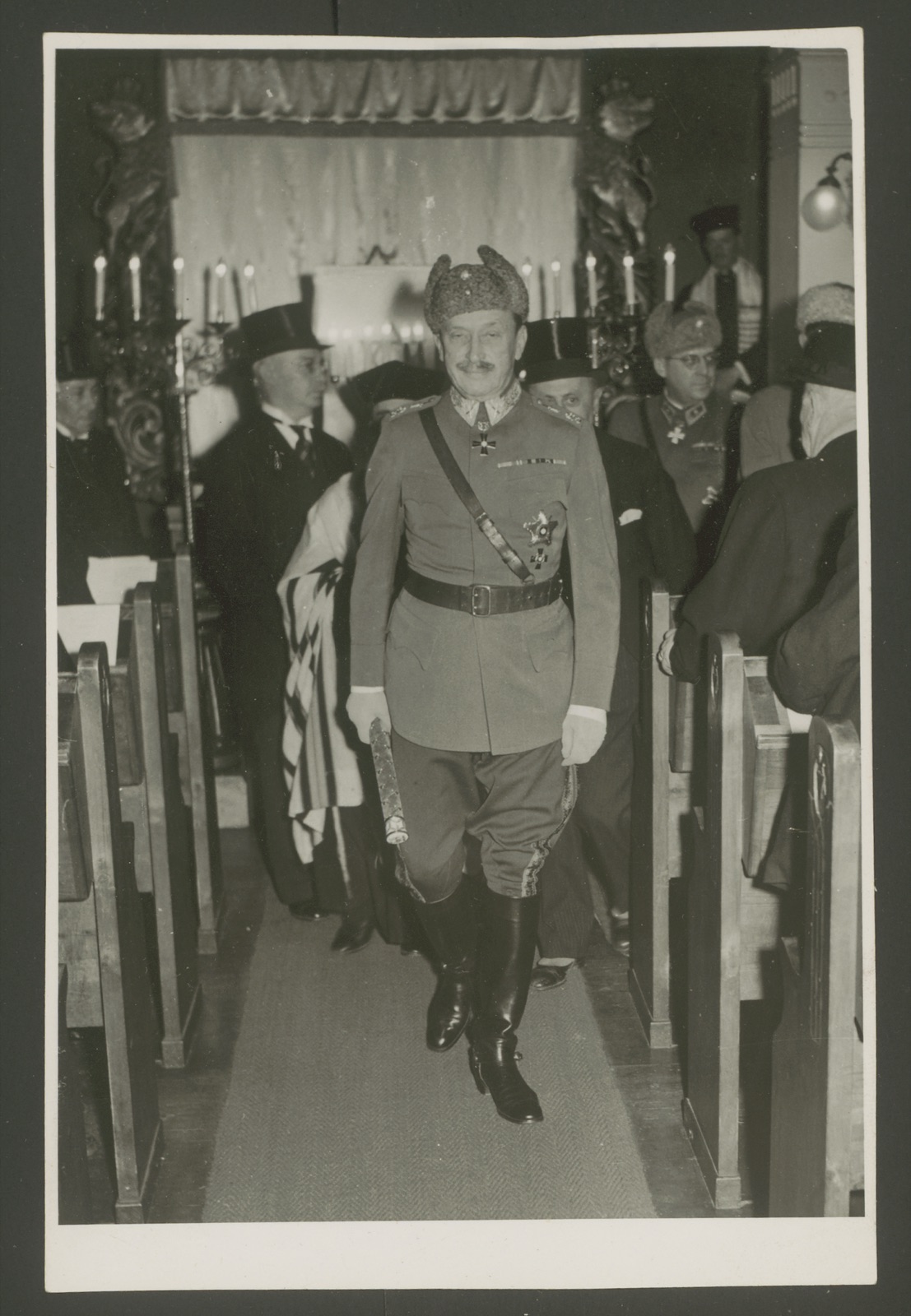
On Finland's Independence Day in 1944, President Marshal Mannerheim visited the Helsinki Synagogue for a memorial ceremony for fallen Jewish soldiers and presented a wreath to the community. At the event, Rabbi Elieser Berlinger offered official thanks to the Finnish people for the fact that Jews had been able to live as equals and had not been persecuted.
Arno Anthoni, the head of the State Police who was responsible for the handover of Jewish refugees, was not brought to trial until 1948. In the end, the Supreme Court dismissed the charges against him, and he received only a warning for misconduct in office.
Remembering those who fell in the wars and the victims of the Holocaust
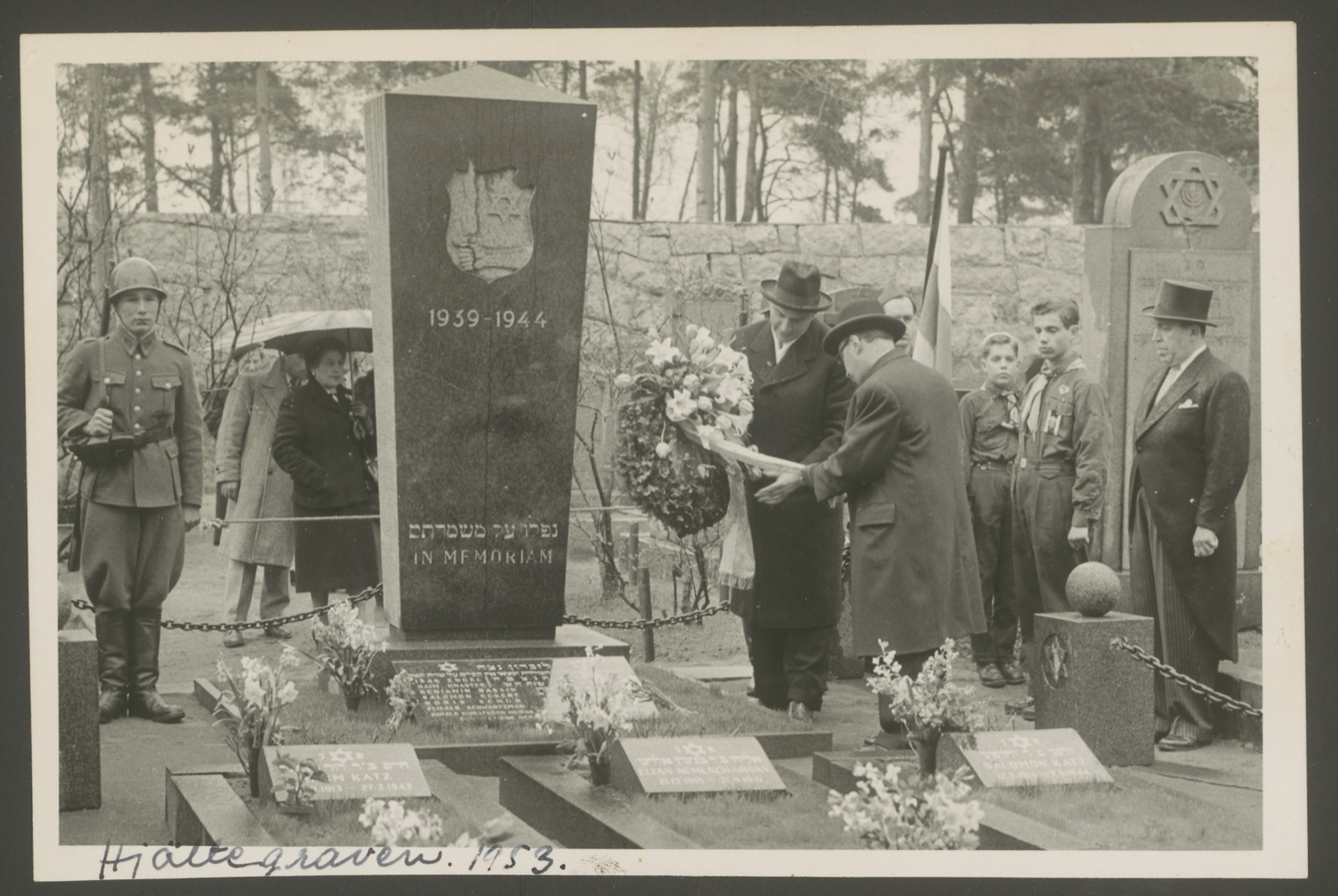
The Jewish community remembered its soldiers who had fallen in the wars through memorial ceremonies and Pro Patria plaques, in the same way as the rest of Finland mourned its dead. In 1952, a memorial to the fallen Jewish soldiers was erected beside the heroes' graves at the Helsinki Jewish cemetery.
The Jewish community also held memorial events for the victims of the Holocaust soon after the end of the war, and international actors whose performances dealt with the genocide of Europe's Jews visited Finland. The Jewish community, however, refrained from erecting any memorial to those who had perished in the Holocaust. The reason for this was the silence prevailing in the country concerning Finland's links to the persecution of Jews and Finland's relationship with Nazi Germany in general.
It was not until 1970 that a memorial to the victims of the Holocaust, mounted on the wall of the Helsinki Synagogue, was unveiled, once it was considered that the political climate allowed it.
Helping the victims of the Holocaust
After the war, the Jewish community sought to help the victims of the Holocaust both financially and materially through various fundraisers. Following the 1946 pogrom in Kielce, Poland, the community's leadership negotiated with the Finnish government over transit visas for Polish Jewish refugees. As a result of the negotiations, more than a hundred Polish Jews were able to leave the country legally. Most of them continued onward from Sweden, and only a small proportion came to Finland.
Members of the community also wanted to help children who had survived the Holocaust, and a few families ended up adopting them.
The Jewish school's activities recover
The Helsinki Jewish School was able to resume its activities in the autumn of 1944, when the children evacuated to Sweden in the autumn of 1944 returned. The school's challenge was to find new teachers of Hebrew and Jewish subjects, since the previous teachers had fled from Finland to Sweden in 1944. The school succeeded in recruiting new teachers from Poland and from Mandatory Palestine.
Because of the war and the uncertain times, the number of pupils attending the school was initially small, but it gradually grew along with the large post-war age cohorts. Before the school turned 30 in 1948, its premises were thoroughly renovated.
Attention turns to Israel
After the war, the eyes of the Jewish community – like those of Jews throughout the world – turned to Mandatory Palestine and the hope of establishing a Jewish national home. Before Israel's Declaration of Independence on 14 May 1948, a group of young Finnish Jews travelled to the Mandate as volunteers to fight for the future state.
The community's journal Hatikwah followed life in Israel closely. After the founding of the state, Hebrew-language culture began to feature increasingly strongly in the activities of the Helsinki Jewish Community: the choir, for example, added new Hebrew-language songs to its repertoire.
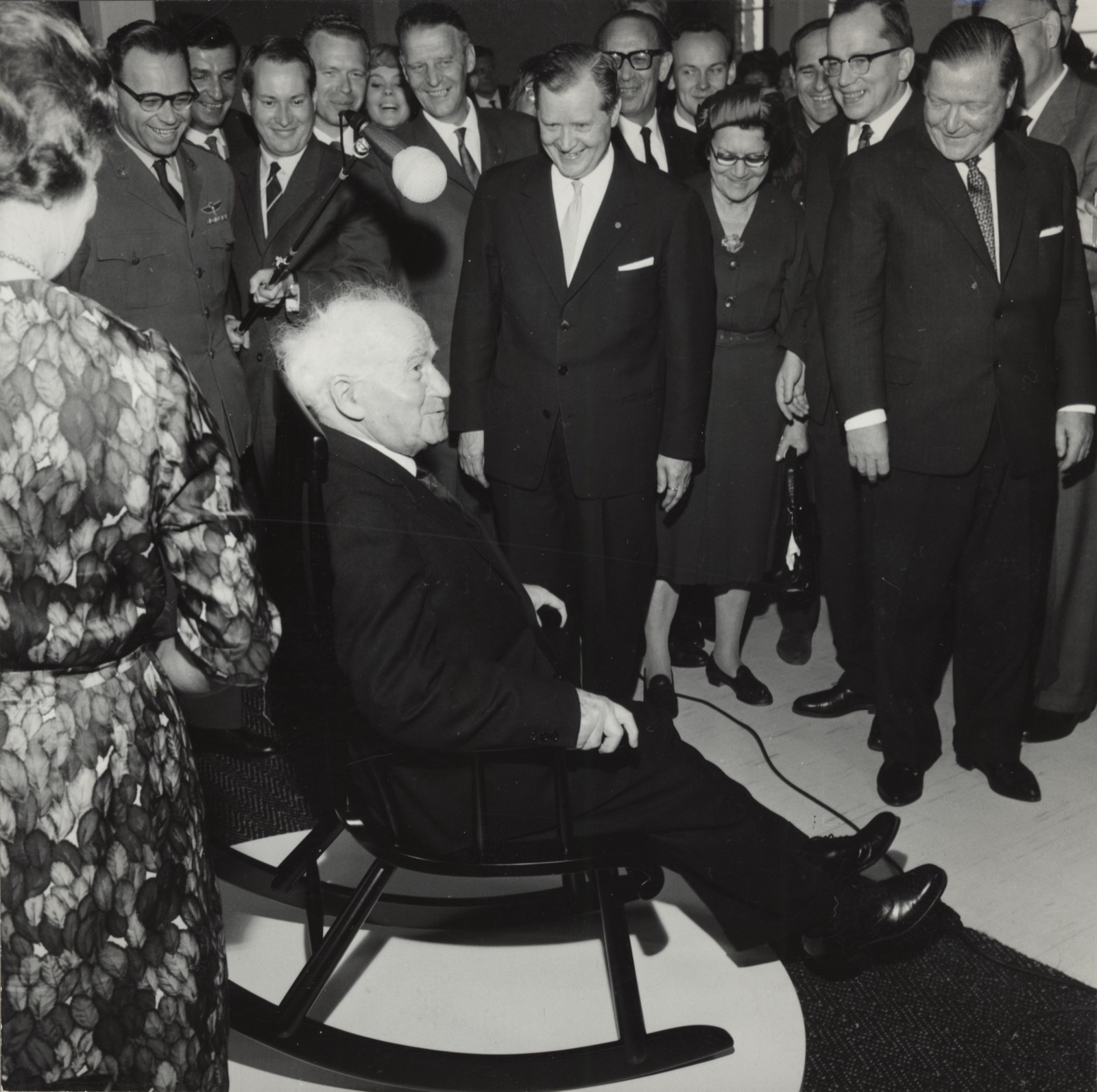
In the 1950s, dozens of young people moved to Israel and began new lives there. At the same time, state visitors from Israel also began arriving in Finland. In 1962, Israel's Prime Minister David Ben-Gurion visited the Helsinki Jewish Community.
A new direction
After the war, Finland's Jewish community wanted to emphasise the equal status of Finnish Jews during the war and to remember its own fallen. At the same time, it helped Holocaust survivors financially and by obtaining transit visas for them. The Helsinki Jewish school recovered quickly after the war and found new teachers from abroad. The founding of the State of Israel gave the community a new direction, and from the 1950s onwards, ties with Israel strengthened through both emigration and state visits.
Images