Civil Rights · 1870–1917
Civil Rights
The Grand Duchy of Finland was an autonomous part of the Russian Empire for 108 years. Until independence in 1917, Finland belonged to the same empire as the Jewish communities of Lithuania, Belarus, and the parts of Poland and Ukraine that belonged to Russia. The Russian Empire had no unified civil legislation.
Of all the peoples of multicultural Russia, Russian Jews held a particularly restricted and regulated status. Permanent residence was confined to designated provinces in the Jewish heartlands of Eastern Europe. Even within the permitted area of settlement, the Russian Empire imposed restrictions, prohibitions, and rules on Jews.
The Jews of Finland were granted civil rights only after the country's independence, following a political tug-of-war that had lasted decades.
Citizenship Tied to Christianity
Autonomous Finland did not actually have specific legislation concerning Jews. What mattered was that Finnish citizenship required the Christian faith. For example, the right to marry and legal capacity required confirmation in the church. Population records were kept by the church. The interpretation that more permanent Jewish settlement was not allowed in Finland was, instead, based on a self-serving reading of the law.
The cornerstone of Finland's special status was legislation from the era of Swedish rule. When, in the 1780s, Sweden had permitted the establishment of a small Jewish community in a number of significant towns, none of these towns open to Jews were located on the Finnish side. Decades later, this was used to derive the interpretation that, under the country's laws, permanent Jewish settlement could not be allowed in Finland.
The few Jews who ended up in Finland converted to Christianity. An exception were the Jews who worked in the Russian garrisons stationed in Finland.
Restricted Freedom of Trade and the Authorities' Control Policy
The situation changed when, in 1858, Russia allowed soldiers who had completed their long military service to settle permanently, together with their spouses, in their place of service. This right also applied to Jews who had completed their military service in Finland.
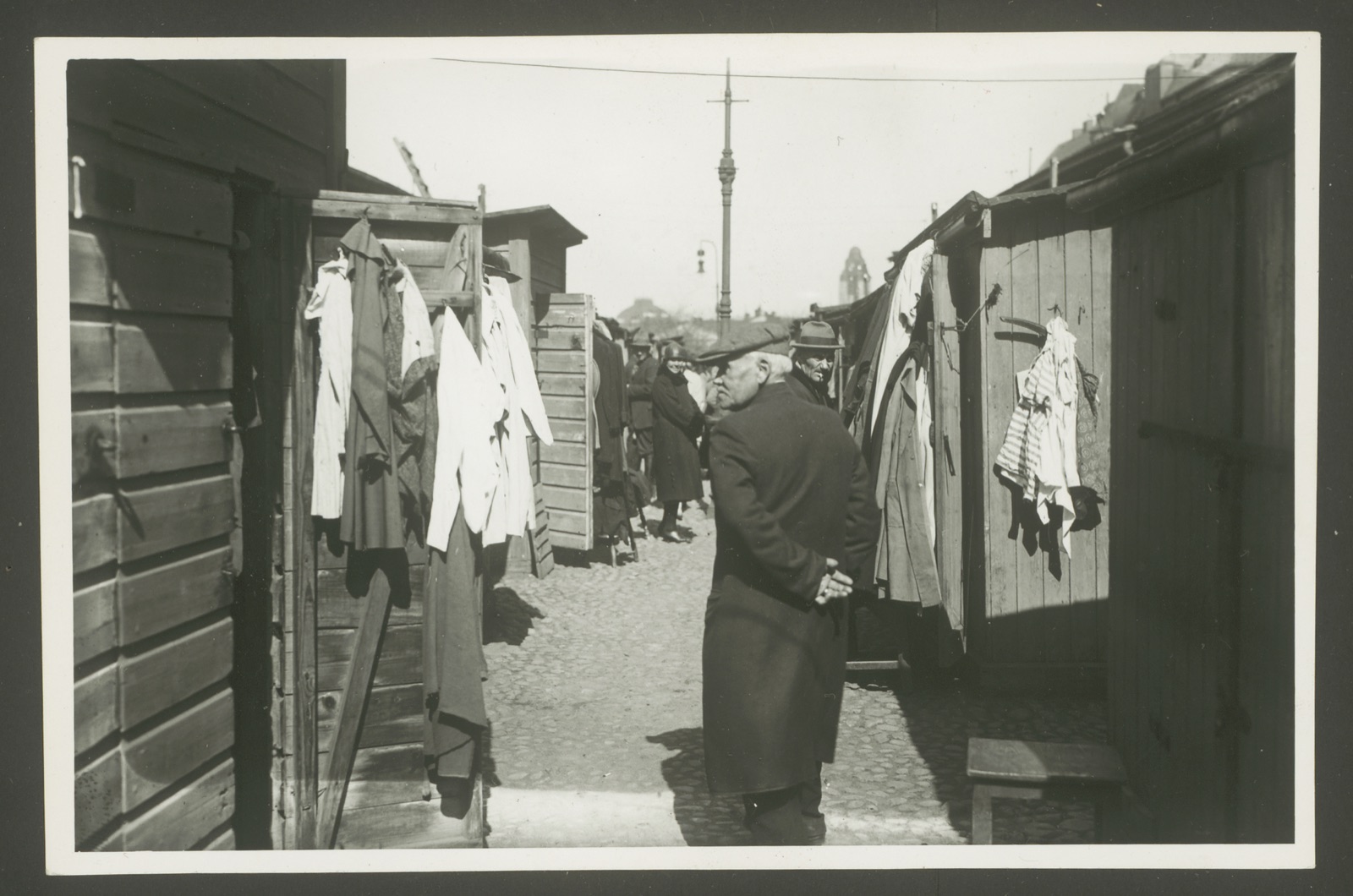
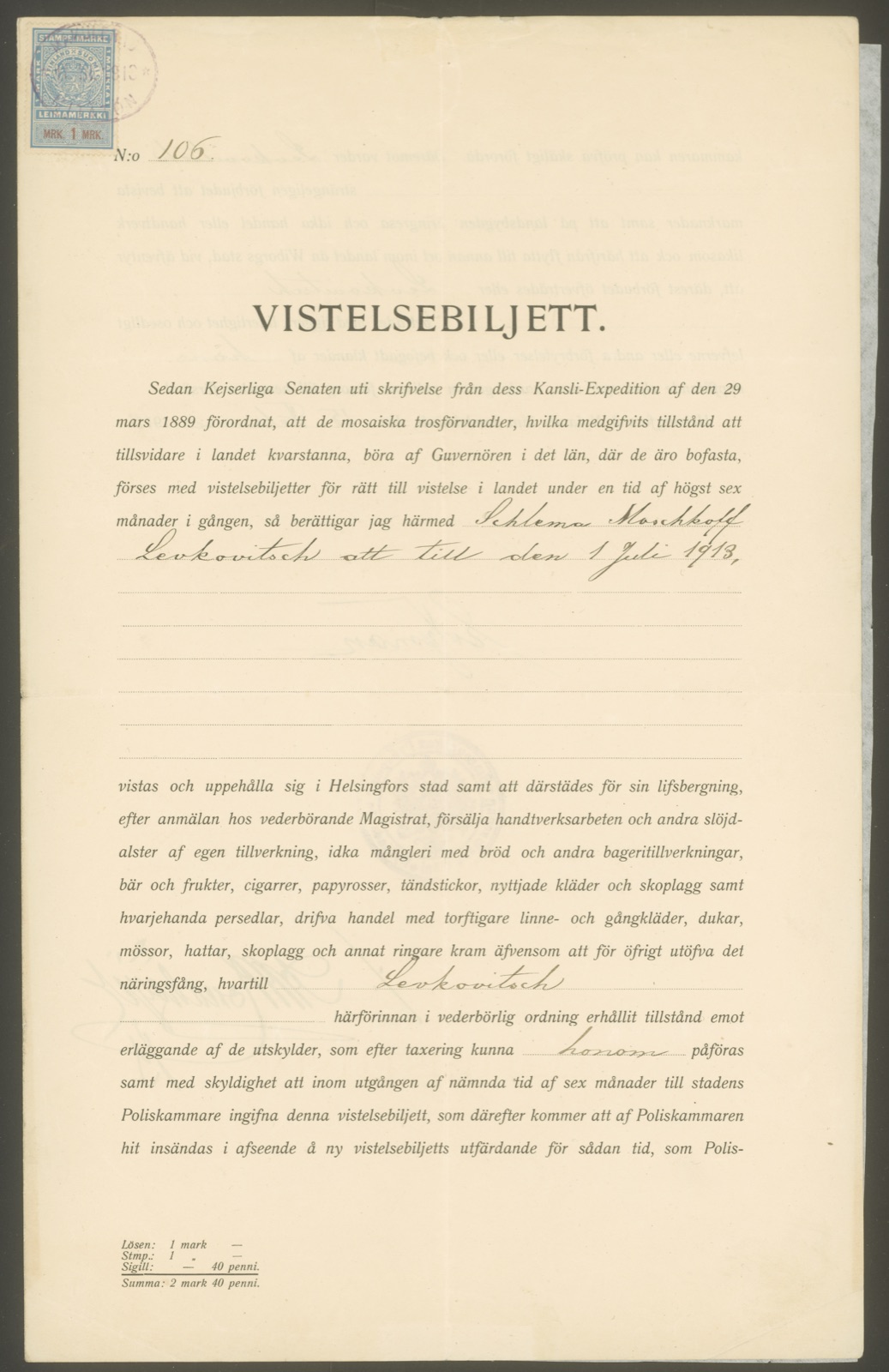
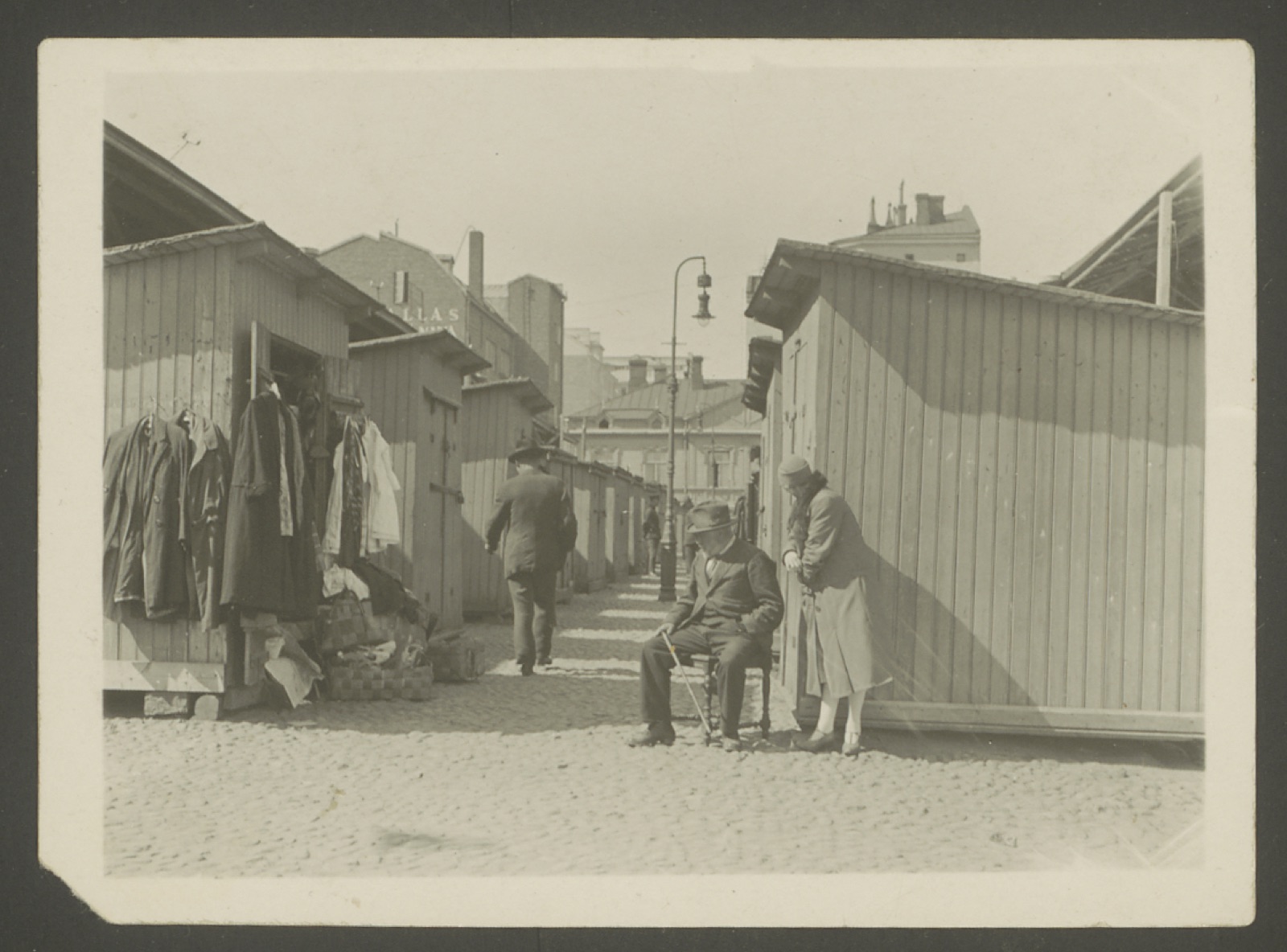
From 1869 onward, the discharged soldiers' and their families' livelihood was restricted to peddling tax-free goods, in particular second-hand clothes, in certain designated market areas. The declared aim of the authorities — the provincial governors and the local police — was to keep the number of Jews as small as possible.
For Jews born and raised in Finland, the situation was untenable. Their right to live in their native country ended when they came of age. The right to live in Finland rested on arbitrary decisions and was open to corruption. Many left the country.
From a European perspective, the idea of separate laws for Jews appeared to be a strange historical relic. Among the Nordic countries, Jews in Denmark were granted civil rights in 1849 and in Norway in 1851.
The Debate on Civil Rights Awakens
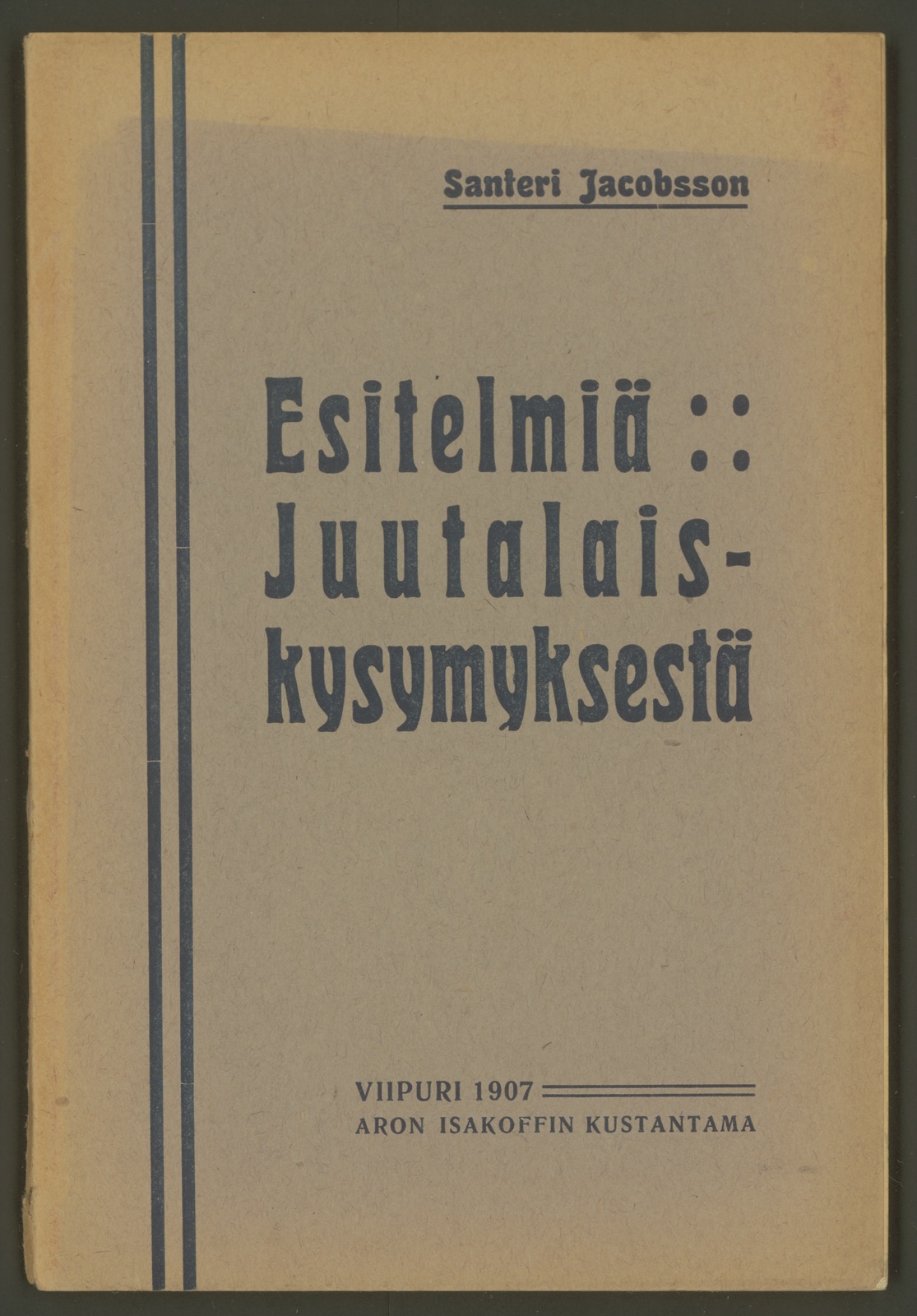
When Sweden removed the restrictions concerning Jews in 1870, a debate also arose in Finland about the possibility of granting Jews civil rights. Opposition to such rights drew on arguments appealing to religion and to the country's weak economic state, which, it was claimed, could not withstand the “competition” caused by Jews. Arguments were even made invoking the rights of animals, referring to Jewish ritual slaughter as a practice foreign to Finns.
On the other hand, the Christian worldview and the need to attract enterprising Jews and their expertise to the country also served as arguments in favour of Jewish civil rights. The debate continued for decades, but remained largely theoretical drawing-room talk.
In practice, Finland's attitude towards Jews reflected the situation in Russia. The widespread pogroms and the rise of anti-Jewish movements in the 1880s had repercussions in Finland and tightened conditions for the Jews living there. In 1889, for example, the validity period of residence permits was shortened to six months, and Jews were forbidden to travel in the countryside.
Jews Begin Campaigning for Their Own Rights
The war between Russia and Japan in 1905 led to political reforms in both Russia and Finland. The parliamentary reform of 1906 modernised Finland's political system. Finnish women were granted the right to vote — the first in Europe, and the second in the entire world.
The absence of political rights now carried a different practical significance. A young, politically active Jewish generation began campaigning to advance its civil rights. The question divided the Finnish political parties. In practice, it became a widely accepted standard to accept Jewish families with a longer-standing connection to Finland.
The lack of civil rights for Jews, however, began to damage Finland's international reputation. The question of how Finland treated its Jews weakened the international support Finland so badly needed. The Jews' rightless status undermined Finland's ability to obtain credit on international financial markets.
The “Act on Persons of the Mosaic Faith” is Born
A proposed decree on Jewish civil rights in Finland was completed in 1909. Finland prepared a law on Jewish civil rights. However, owing to political unrest and the expanding Russification campaign, the law never made it as far as Saint Petersburg. This delay had concrete consequences. When the First World War broke out, a large proportion of Finnish Jewish men were sent to the front as Russian citizens.
The establishment of the civil register in 1917 was an important step towards broader freedom of religion. This was followed, on 12 January 1918, by the “Act on Persons of the Mosaic Faith”, the law that gave Jews the possibility of Finnish citizenship. The law brought to an end decades of debate over the rightless status of Jews in Finland. Ultimately, the rightless status of Jews stemmed from Russian rule, not from the political will of the Finnish majority.
Less attention has been paid to the fact that, although Jews living in Finland were not deported to Soviet Russia after independence, the right to citizenship did not automatically confer citizenship itself. Many Finnish Jewish families went through a lengthy process with the authorities in order to obtain Finnish citizenship.
Images