Sports club
Makkabi — a Finnish-Jewish sports club
Makkabi is a Jewish sports club based in Helsinki and one of the oldest associations within the Finnish-Jewish community. For over a hundred years it has given the Jews of our country the opportunity to do sport together — and at the same time has built a bridge between the Jewish community and the rest of Finnish society.
Historical roots
When young Jews, who had gained their first impressions from other sports clubs, wanted to do sports in a club of their own, they approached the leadership of the small Orthodox Jewish community of Helsinki in the early 1900s. They were met with a dismissive attitude: “Sport, what is that; it does not belong to us, but to the non-Jews” was the answer given by the community's conservative leadership when young Jews influenced by the majority population wanted to found their own sports club. The nationalist sentiment that had grown in the Grand Duchy of Finland under Russian rule had also taken hold of the young Jews, who saw sport as a lever into Finnish society.
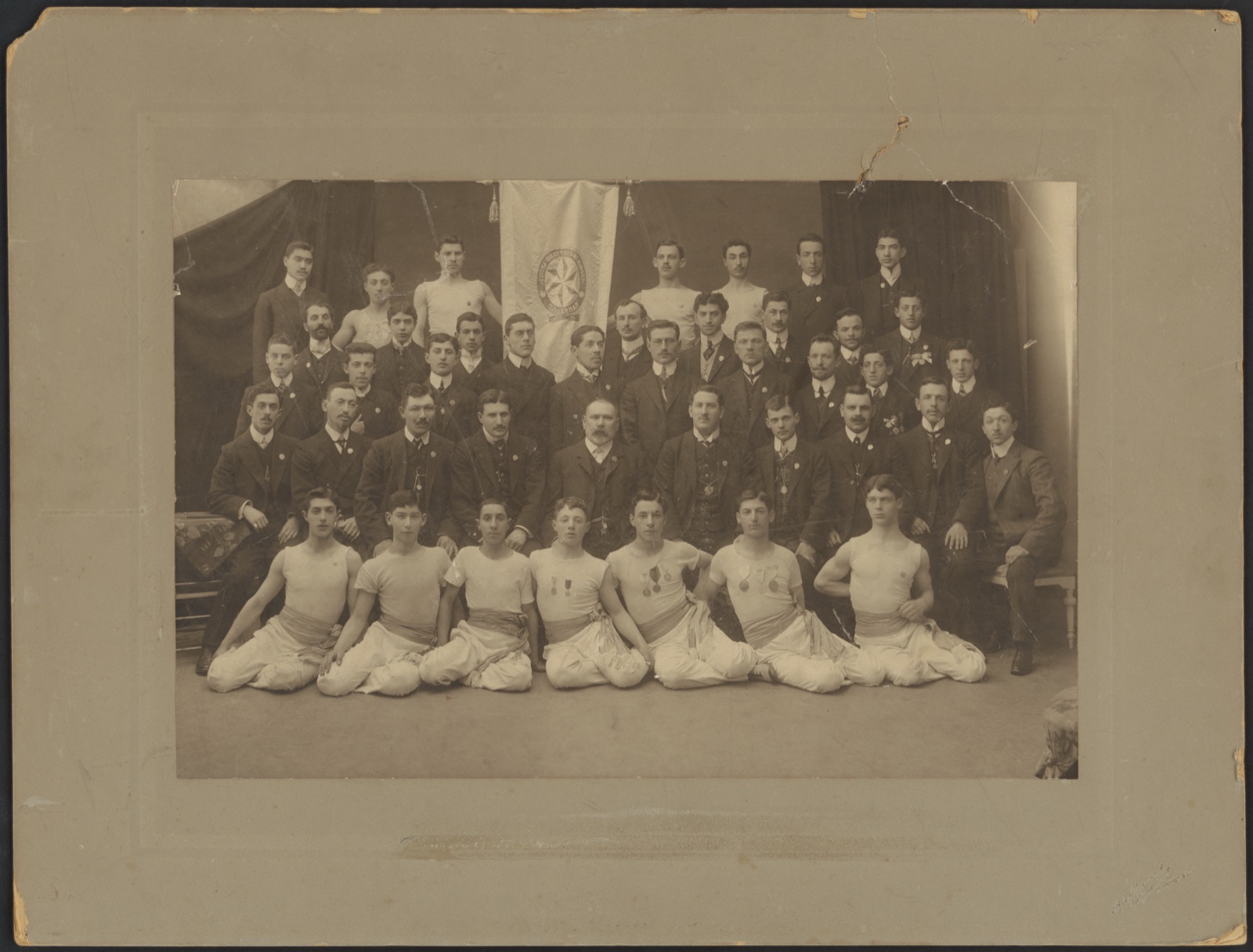
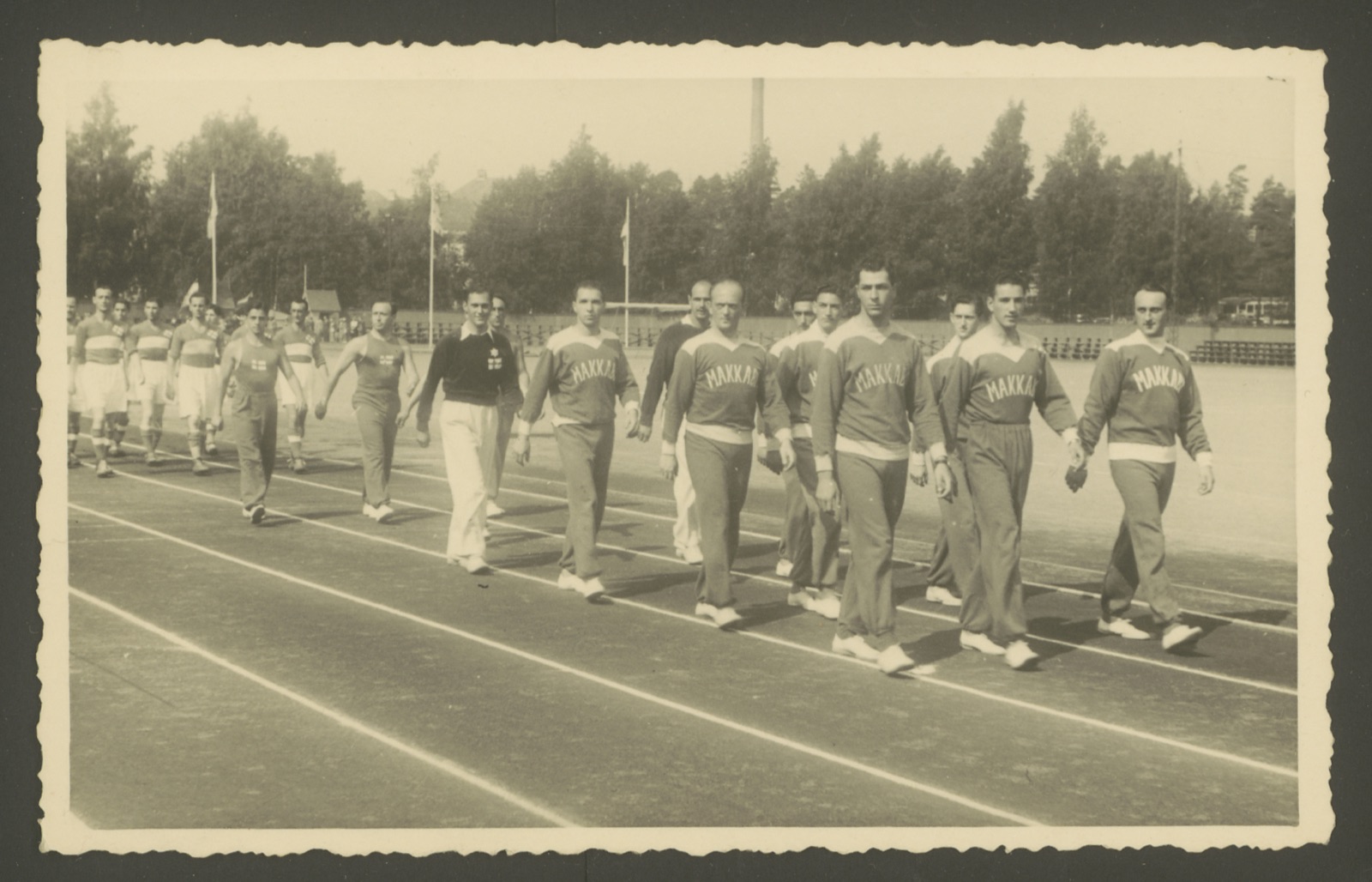
The club's founder was the 23-year-old Jakob Hirschovits, who together with his companions defied the community's conservative leadership and in 1906 founded a Jewish sports club named Judiska Idrottsföreningen Stjärnan (the Jewish Sports Club Star). In 1932, the club took the new name Makkabi and, inspired by Zionism, joined the international Makkabi union. The Star of David remained the club's emblem.
The Jews of Turku and Viipuri (present-day Vyborg, Russia) also founded their own sports clubs in the 1920s. Turku had Makkabé and Viipuri had Kadur.
Development over the decades
A widening range of sports
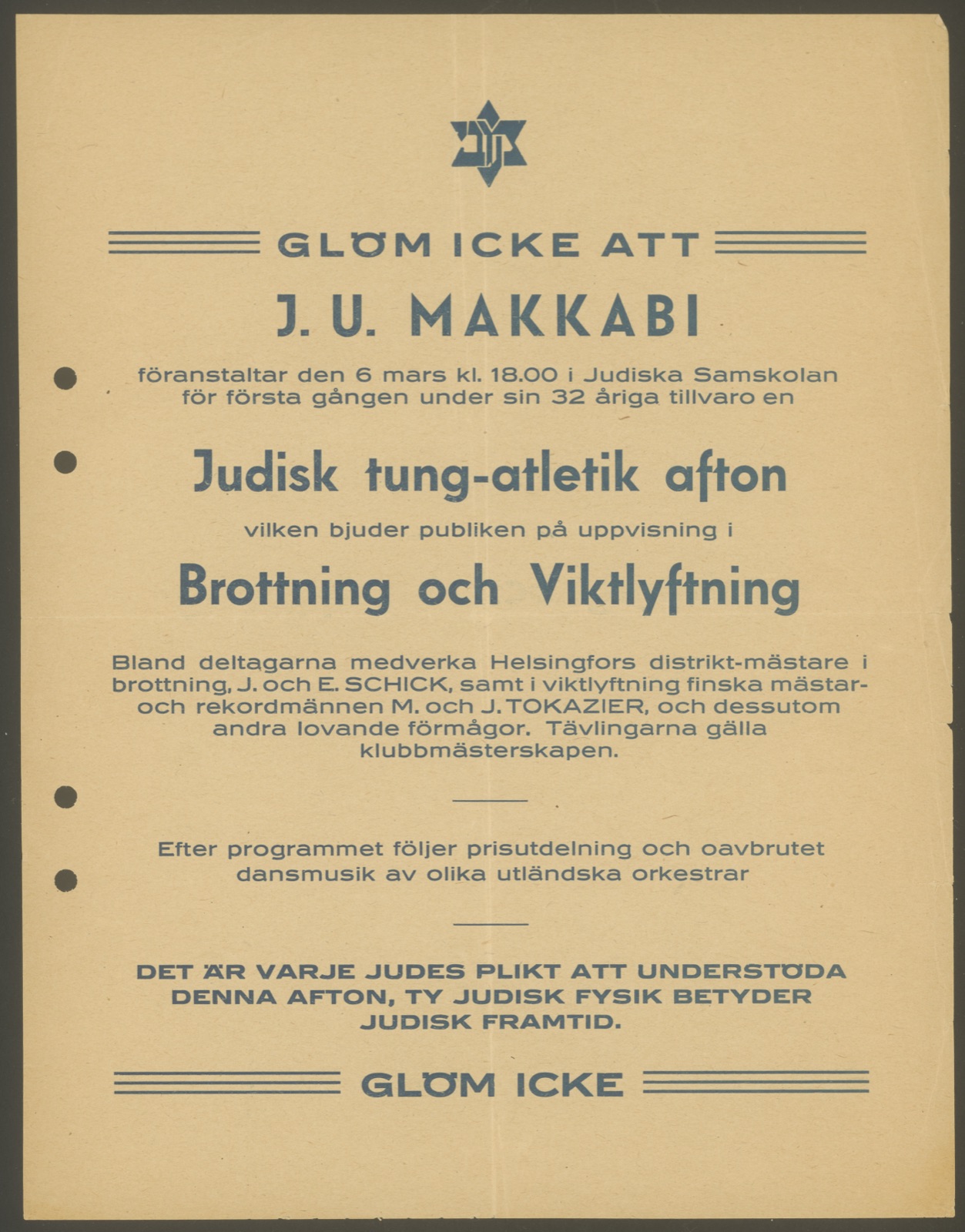
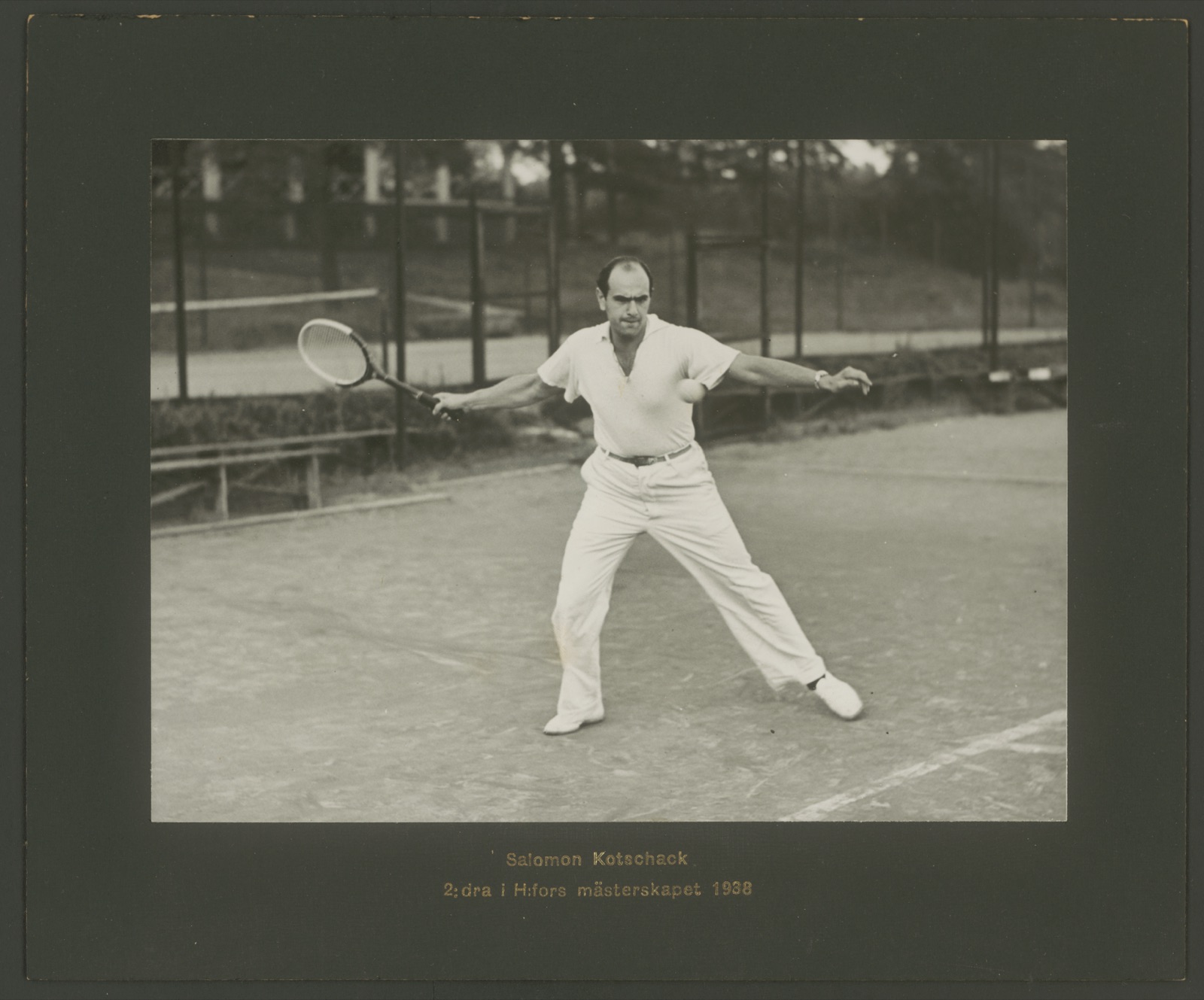
At Stjärnan, people first took up running, cycling, gymnastics, and skating, until football and bandy gained the upper hand among the youth. Over the following decades, the range of sports grew more varied: wrestling, weightlifting, tennis, table tennis, and bowling, among others, were taken up. By the war years, Makkabi had helped found several sports federations, and the first Jews had won Finnish championships in sports such as wrestling, weightlifting and table tennis. The club had international representatives in football and bandy, and in the early stages of the football league, Stjärnan even played at the highest league level.
Through their own clubs the young Jews made contact with other Finnish clubs, which gave rise to friendships, friendly matches, and lively competitive activity.
The Olympic Games
Finland's most distinguished Jewish athlete is Elias “Ellu” Katz, who, together with Paavo Nurmi and Ville Ritola, won the gold medal in the 3,000 metres team race at the 1924 Paris Olympic Games. At the same games, Katz took silver in the 3,000 metres steeplechase.
Alongside Katz, Finland was represented in Paris by the sprinter Hirsch Drisin. At the 1952 Helsinki Olympic Games, Finland was represented by the sprinter Israel “Issi” Baran, and at the 1968 Mexico City Games by the wrestler Ariel Nadbornik.
Elias Katz moved to Israel in the 1930s and remained Finland's forgotten Olympic champion for decades. On the initiative of Helsinki Makkabi's active members, the bronze Olympic rings that belong to every Finn who has won Olympic gold were affixed to his gravestone in Rehovot in the summer of 2022.
The Tokazier case — the most flagrant example of discrimination
Finnish sport was not spared from antisemitic discrimination. A few sports clubs refused to accept Jews as members, and there were cases in which Jews were not taken on to represent Finland at the level of the sports federations as well.
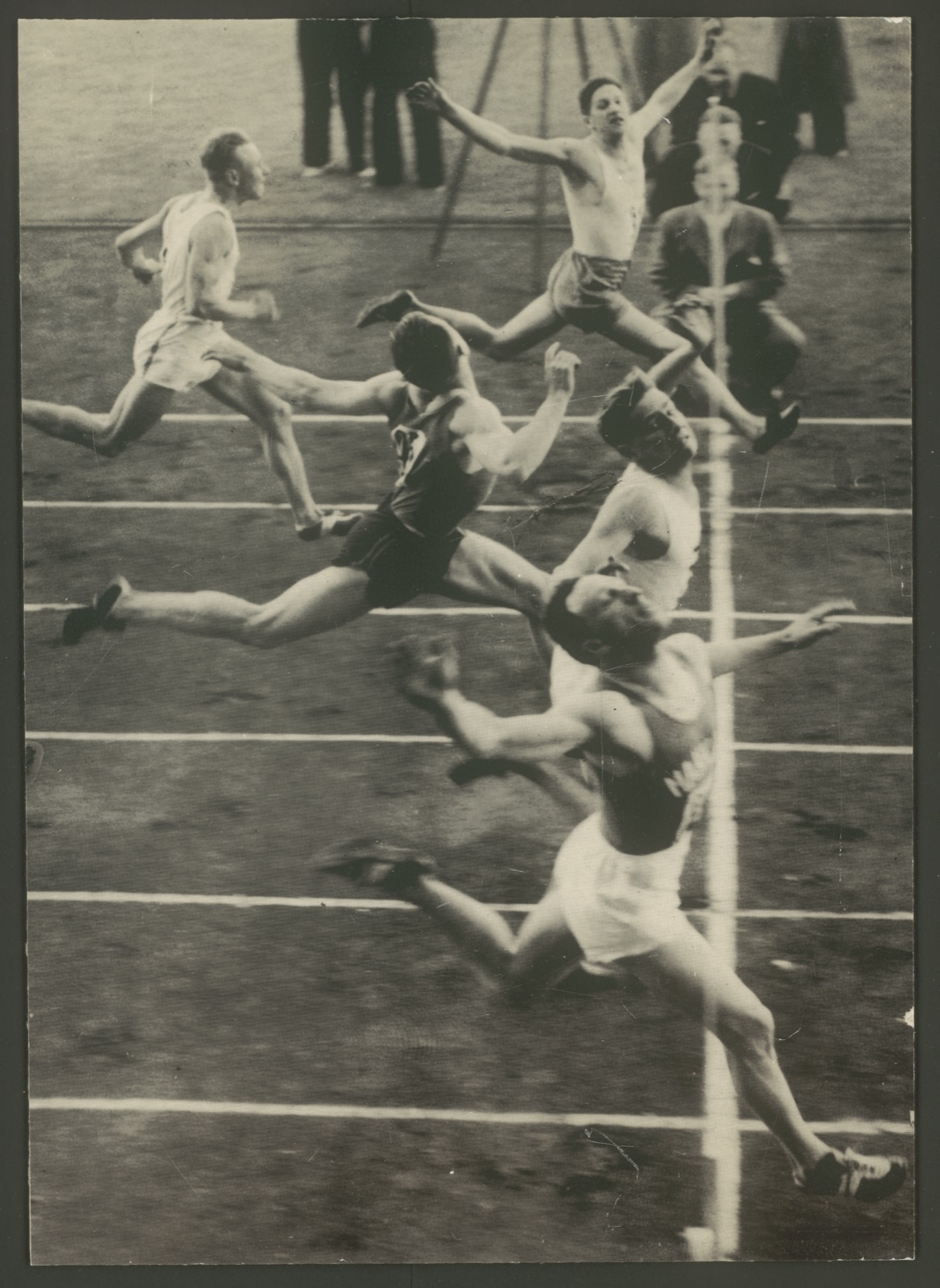
The most flagrant example is the Tokazier case from 1938, from the first athletics competition at the newly inaugurated Helsinki Olympic Stadium. The 28-year-old Abraham Tokazier, who represented Makkabi, was among Finland's leading sprinters and one of the competition's candidates for victory.
After the short and closely contested 100 metres, the stadium announcer immediately declared Tokazier, who had run in lane six, the winner of the race. The finish line photographs supported this decision, yet the judges placed him fourth. The next day's newspapers published the finish line photographs and stated that an injustice had occurred.
Makkabi lodged a protest and demanded a correction of the finishing order in writing, but the demand went unanswered. The numerous appeals made over the decades were followed by 75 years of silence. Only in 2013 did the Finnish Athletics Federation apologise for the injustice, and Abraham Tokazier was declared the winner of the 100 metres at the Olympic Stadium's inaugural competition.
The war years
With sport suspended during the war years, Makkabi's activity focused on supporting its members at the front with food parcels, warm clothing, and letters. The club's own magazine, Makkabi, published a morale-sustaining column called “Field Post”. Despite the years of the Second World War, its activity was never interrupted, and Helsinki Makkabi is therefore regarded as the world's oldest continuously operating Jewish sports club.
The Maccabiah Games and international activity
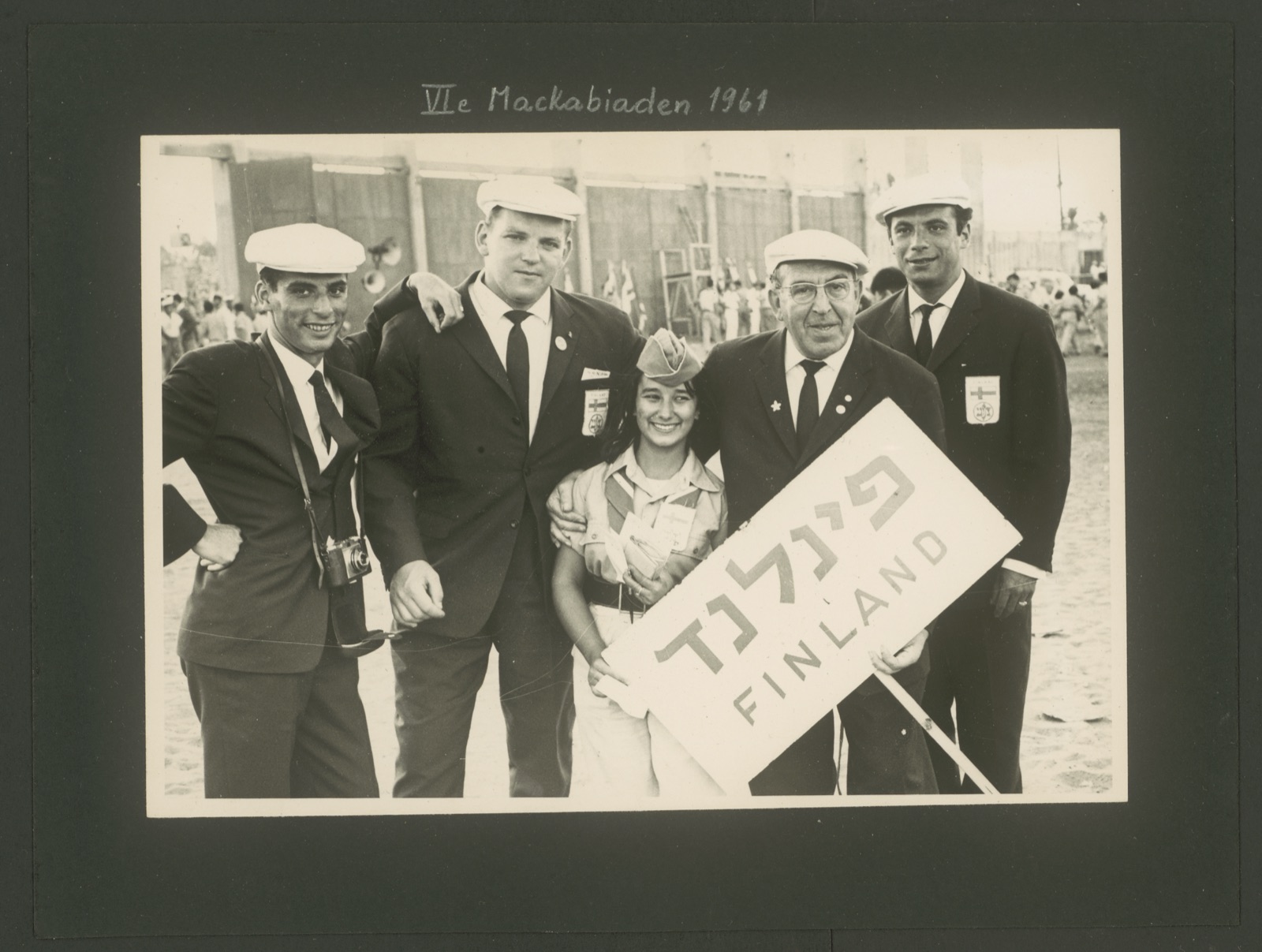
Since Israel gained its independence in 1948, the Maccabiah Games — that is, the Jewish Olympic Games — have been held in the country every four years. Finland has sent representatives to the Games since 1950, and a few of them have brought home medals. Makkabi's honorary chairman Leo-Dan Bensky served as president of Maccabi World Union from 2013 to 2018.
Today
Makkabi today offers its members sporting events in various disciplines. The main disciplines are bowling, golf, tennis and men's gymnastics. The club takes part every year in the international PGT youth football tournament, as well as in the Triangel bowling match played with the sister clubs of Turku and Stockholm.
The tournament bears the name of Pierre Gildesgame, known as “Mr. Maccabi” and a former chairman of the Makkabi World Union. The tournaments held each year in the Nordic countries bring together nearly 300 junior players in total. In 2026, the tournament was played for the first time in Tallinn, when Estonia was included in it.
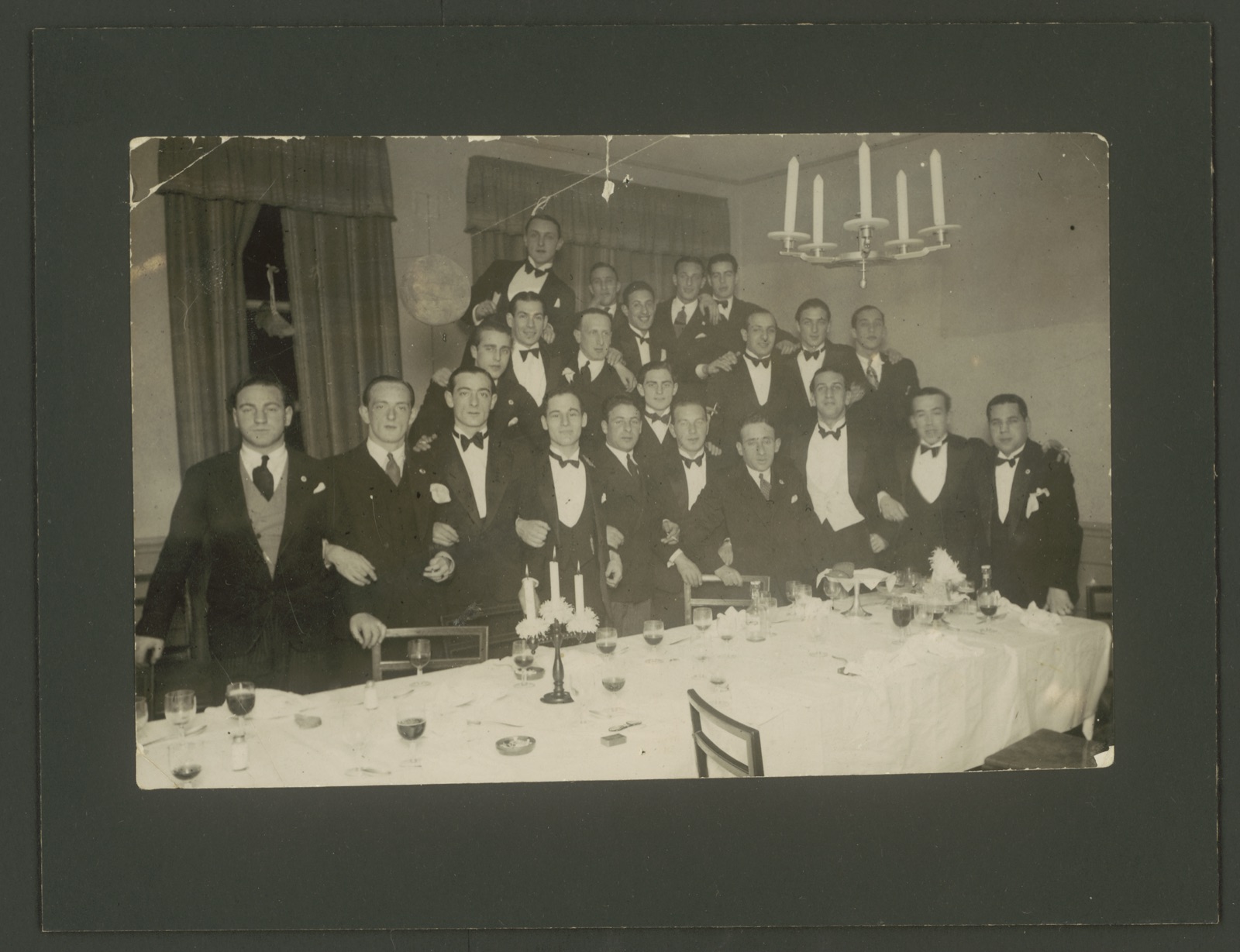
In addition to sport, Makkabi's annual “gentlemen's dinners” are among the community's most popular events. The club also invests in young people's recreational activities and in fellowship, thereby supporting continuity and the strengthening of Jewish communal life in Finland.
Makkabi's current chairman is Arje Rimon. Makkabi has over 100 members.
Images